
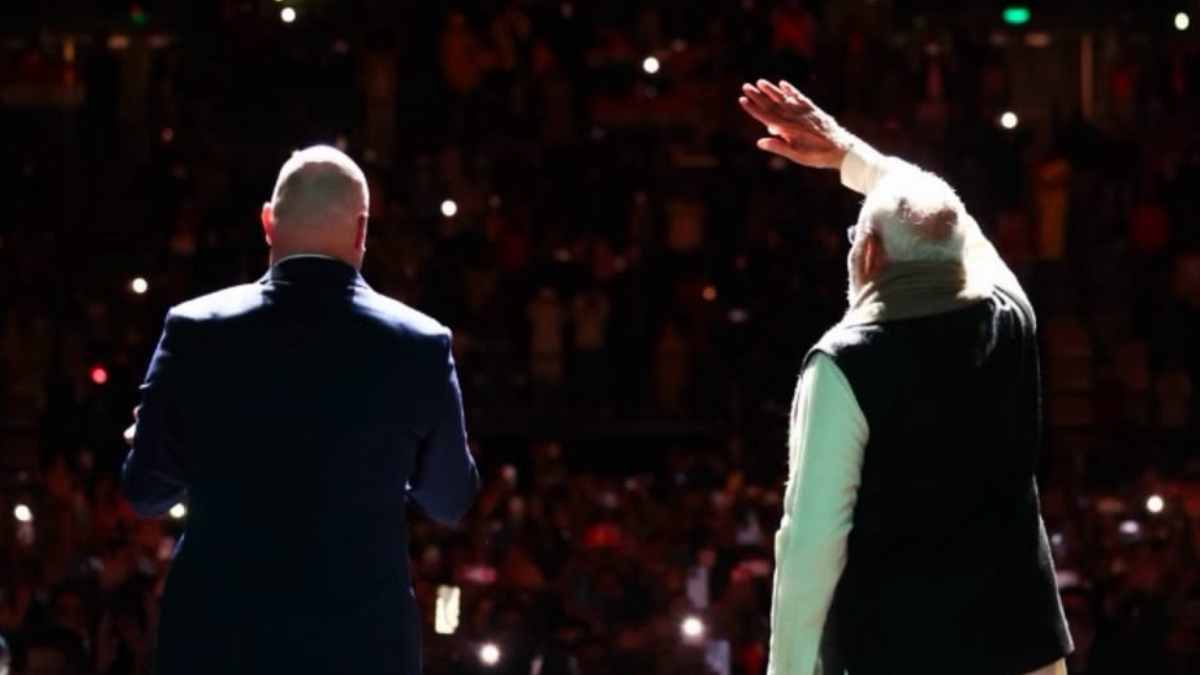

Six days, three countries and roughly 40 agreements later, Prime Minister Narendra Modi’s July tour of Indonesia, Australia and New Zealand looked less like a routine diplomatic circuit and more like a statement of intent.
As uncertainty grows over how reliably the United States will maintain its security commitments across Asia, India is moving quickly to fill the space, building a web of partnerships designed to function without depending on any single alliance holding everything together.
Modi’s trip, running from July 6 to 11, began in Jakarta, where India and Indonesia signed 20 agreements and outcome documents spanning defence, maritime connectivity, critical minerals, digital infrastructure and trade. Indonesia agreed to expand its inventory of India made BrahMos supersonic cruise missiles, becoming the third Southeast Asian nation after the Philippines and Vietnam to acquire the system, and the two countries finalised plans for the joint development of Sabang Port, a strategically positioned harbour near the Malacca Strait.
In Australia, Modi and Prime Minister Anthony Albanese struck a long term arrangement allowing Australian uranium exports to India for civilian use, alongside a renewed commitment to a free and rules based Indo-Pacific.
The tour closed in New Zealand, the first visit there by an Indian prime minister in four decades, where Modi and Prime Minister Christopher Luxon elevated bilateral ties to a full Strategic Partnership, adopted a roadmap running to 2030, and finalised a bilateral free trade agreement covering 18 separate areas of cooperation.
The tour did not arrive out of nowhere. Days earlier, Japanese Prime Minister Sanae Takaichi made her first visit to India since taking office, during which she and Modi signed the two countries’ first joint defence co-development project, a signal that Tokyo, too, sees value in deepening ties with New Delhi at exactly this moment.
The pattern extends well beyond this one tour. India elevated ties with Vietnam to an Enhanced Comprehensive Strategic Partnership during a state visit in May, a move Balakrishnan linked to shared Indo-Pacific security concerns and growing economic integration between the two countries. New Delhi has also been expanding joint defence exercises and maritime cooperation with Singapore, Malaysia and Thailand.
None of this is happening in a vacuum. The outreach comes amid growing concern over the durability of American security commitments in the region, fuelled by shifting political rhetoric out of Washington and ongoing trade friction between India and the United States.
Some Indian observers have specifically flagged the reported renaming of the US Indo-Pacific Command to the US Pacific Command as a worrying signal, one that could suggest a diminished role for India within America’s regional planning even as New Delhi works to expand its own.
Not every partner is moving at India’s pace. Indonesia in particular has approached the BrahMos and Sabang Port arrangements carefully, seemingly mindful of how Beijing might read closer defence ties between New Delhi and Jakarta. That caution is a useful reminder that India’s expanding network, however ambitious in scope, is still being built country by country, with each partner weighing its own relationship with China alongside its interest in deeper ties with India.
